Saurabh P.Coworking10 / 10
Best place n affordable to work in Paris wonderful environment
701 meeting rooms bookable online in Paris, from €50 per day excl. tax: pick a date and a size, pay online, confirmed in 2 minutes.
From global Fortune 500 leaders to fast-growing tech unicorns, businesses choose workin.space to book meeting rooms, private offices and coworking spaces around the world.














































Paris has 701 meeting rooms available to book from €50/day (excl. VAT) across 115 partner centers, rated 9.3/10 by 25 customers.
Ratings left after the stay by customers who booked on workin.space.
Excellent
25 verified reviews · 16 spaces
Best place n affordable to work in Paris wonderful environment
Opening hours stated on the booking: 8am–7pm. I had an appointment booked for 8am, but reception didn’t open until 8.30am.
Written in French, machine translated ·
Awesome environment great place to work
Great location, easy to reach and well connected.
Quiet room, perfect for calls and video meetings.
Everything was spot on, from the booking right through to departure.
Written in French, machine translated ·
Chee Romeo is a quiet venue. But it’s expensive.
Written in French, machine translated ·
Nothing to report. Everything was perfect.
Written in French, machine translated ·
A clean, bright and well-equipped room – nothing to complain about. The staff were helpful and accommodating. We’d recommend it.
Written in French, machine translated ·
The internet connection is good, the seats are comfortable and there’s plenty of space. One free coffee is provided per day, and there are plenty of phone booths available. However, at lunchtime the space is used as a canteen by staff from other floors, so it quickly gets noisy between 12 noon and 2 pm.
Written in French, machine translated ·
Absolute slay - WiFi was top tier
No synchronisation with the booking platform, so nobody was expecting me. The room I’d booked had no air conditioning, even though it was listed as having it 😡. The Wi-Fi wasn’t secure, which is unacceptable in terms of cyber security. There was a discrepancy between the refreshments ordered for the break and what was actually provided (coffee, tea, water, juice and petits fours ordered) – on the first day we were given juice and a few petits fours but no coffee or tea; after complaining, it was sorted. In short, I won’t be returning any time soon.
Written in French, machine translated ·
Everything was exactly as described; no surprises.
Written in French, machine translated ·
Unless I’m mistaken, the venue isn’t air-conditioned, or at least not properly. This is a major issue given the current temperatures. Otherwise, the location is ideal
Written in French, machine translated ·
Excellent location, close to the Arc de Triomphe. The premises are decent and pleasant, although they don’t particularly stand out from other co-working spaces. Booking via Workin was straightforward and went without a hitch.
Written in French, machine translated ·
A very warm welcome, with coffee, water and cake! The manager is incredibly attentive! The office is spacious and the Wi-Fi works perfectly. The only downside is that the soundproofing between the offices could be improved. That won’t stop me from coming back, though!
Written in French, machine translated ·
It was great! The chap at reception was very professional!
Written in French, machine translated ·
The welcome was brilliant; we were given excellent guidance.
Written in French, machine translated ·
We booked a room at the last minute because of the heatwave. Our original room wasn’t available, but we were able to use a larger one at the same price. We stayed nice and cool, and the person running the venue was brilliant to us. I’d recommend it
Written in French, machine translated ·
Compared to other co-working brands, there is a lack of vending machines for hot and cold drinks and snacks.
Written in French, machine translated ·
Lovely space. It would be very helpful if you could open just before 9 am for the first calls
Written in French, machine translated ·
Everything went well; we stayed there all day
Written in French, machine translated ·
A magnificent venue, with very friendly, welcoming, helpful and courteous staff. The café area is a real bonus. The cappuccino is very good. The meeting rooms are clean, as are the toilets. Everything was perfect. I highly recommend it.
Written in French, machine translated ·
Youssef’s top-class hospitality
Written in French, machine translated ·
A very warm welcome Brand-new premises Nothing but positives
Written in French, machine translated ·
Average of 25 reviews left in Paris, measured on 26 October 2026. A review can only be left after a paid booking.
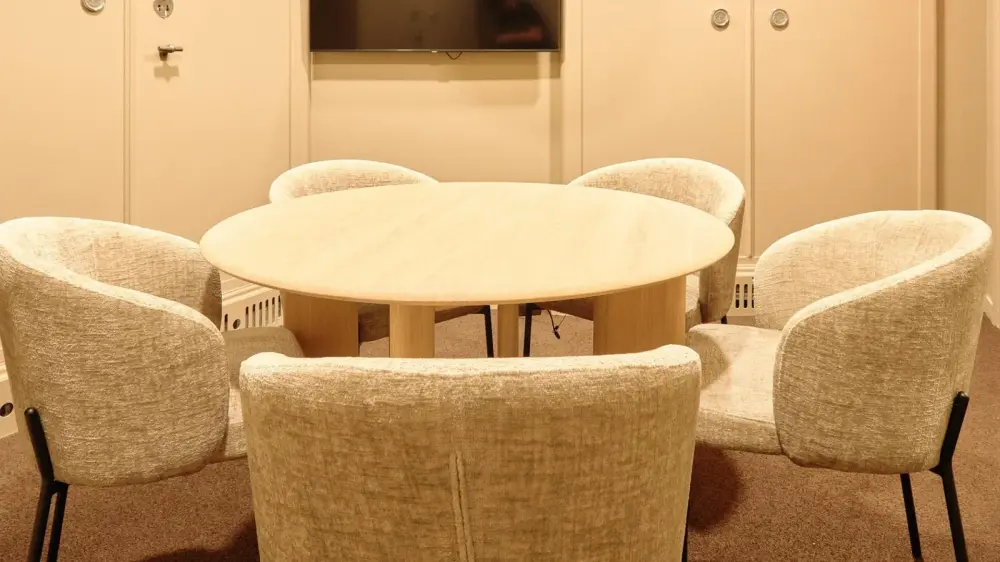
Founders meeting investors or managers conducting one-on-one evaluations find compact settings ideal for discreet conversations. With 176 offers across the capital, booking a private enclave like Salle Réal at Morning Bourse keeps overhead predictable, starting from 50 EUR per day excl. tax.
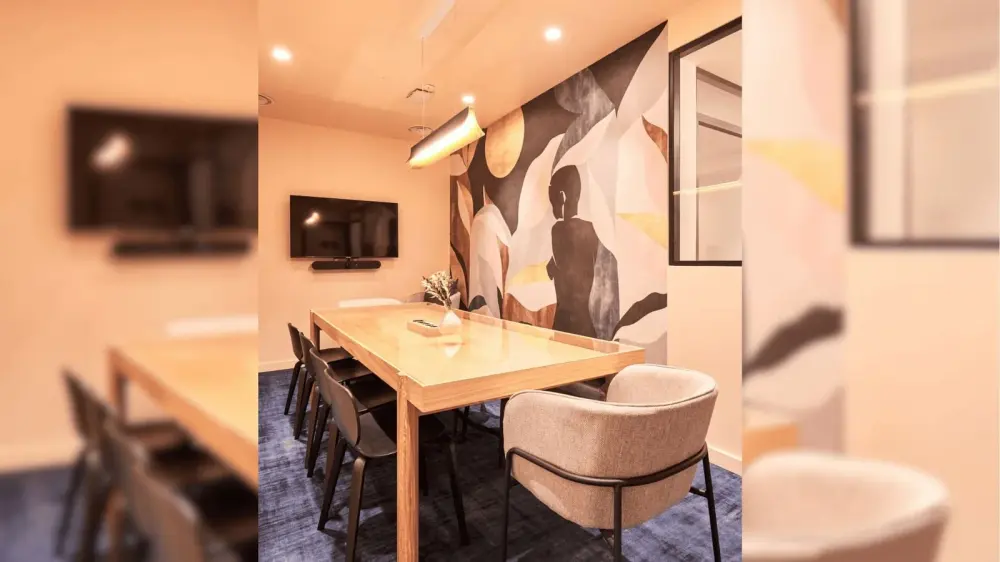
Project squads gathering for sprint retrospectives or board subcommittees need space to deliberate without feeling cramped. The city hosts 320 offers in this core category, where options such as Salle Ponceau at Morning Vivienne average 435 EUR per day excl. tax while accommodating up to ten participants.
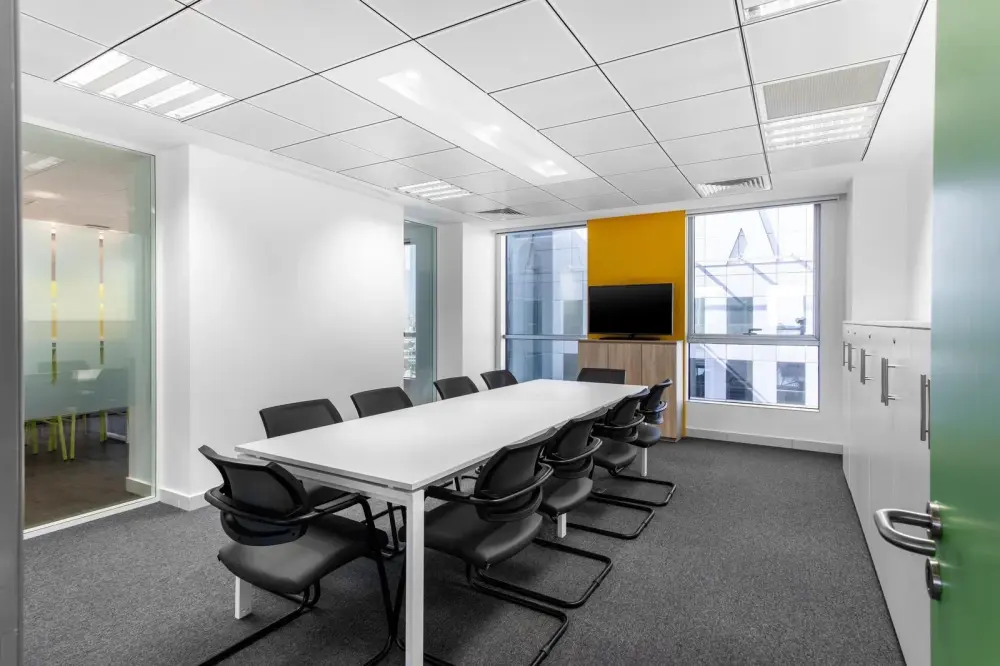
Department leads running full-day workshops or client training sessions require adaptable layouts and dedicated breakout space. You can select from 168 offers throughout the capital, securing spaces like Salle Couronne at Morning Bourse where rates average 739 EUR per day excl. tax.
Corporate coordinators staging town halls or product launches demand high-capacity venues with presentation staging. With 53 offers available, spaces like Salle 16/55pax at Baya Paris - Petits Champs seat up to 55 guests, with market options reaching up to 100 people at Meeting room Désirade & Avès.
Day rate excl. tax, lowest first, all sizes together.
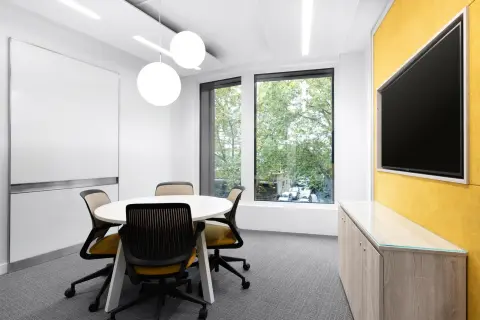
Booking a meeting room in Paris gives your team immediate access to fully configured boardrooms, workshop facilities, and presentation spaces across the capital. A day booking ranges from 50 EUR to 2540 EUR excl. tax, with a citywide median price of 419 EUR excl. tax across 717 priced rooms. Online reservations confirm directly, with 264 offers providing instant confirmation so you can settle client briefings or team sessions without waiting for manual quotes.
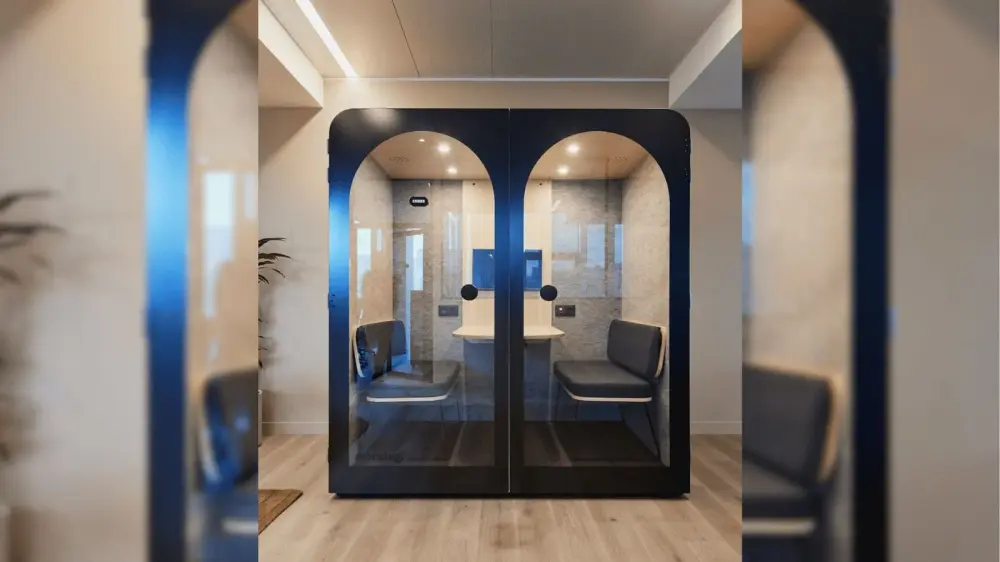
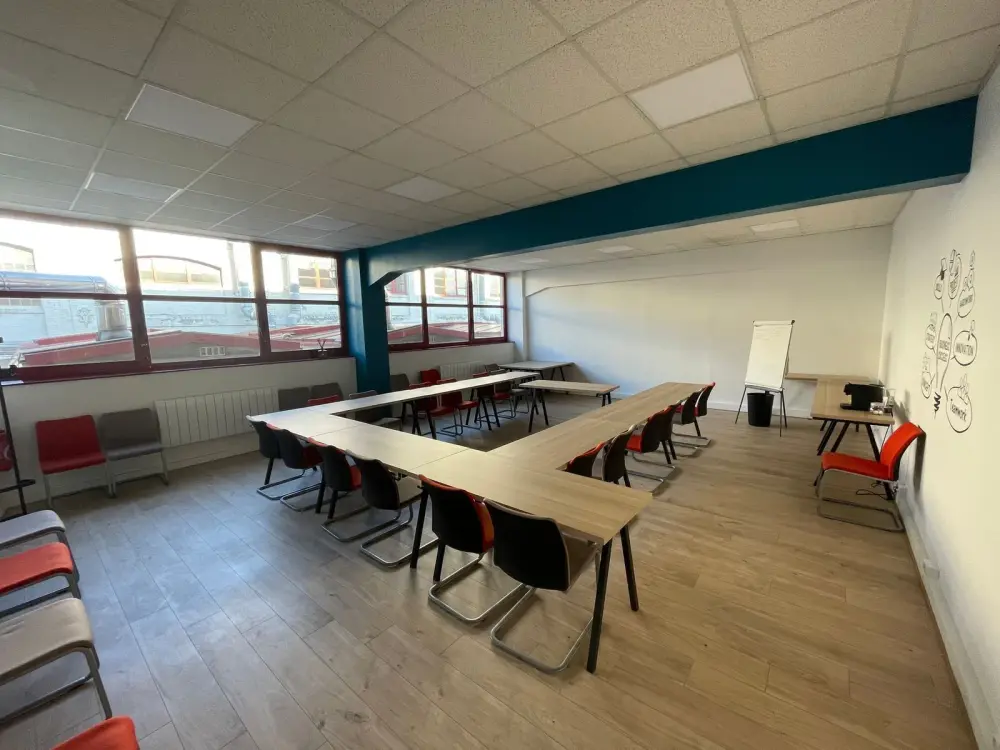
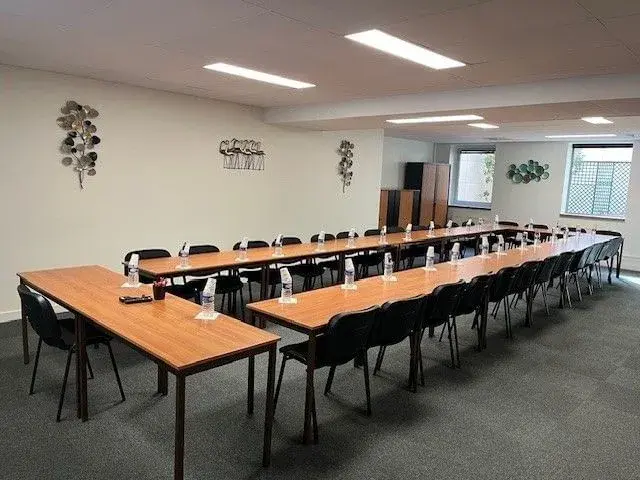
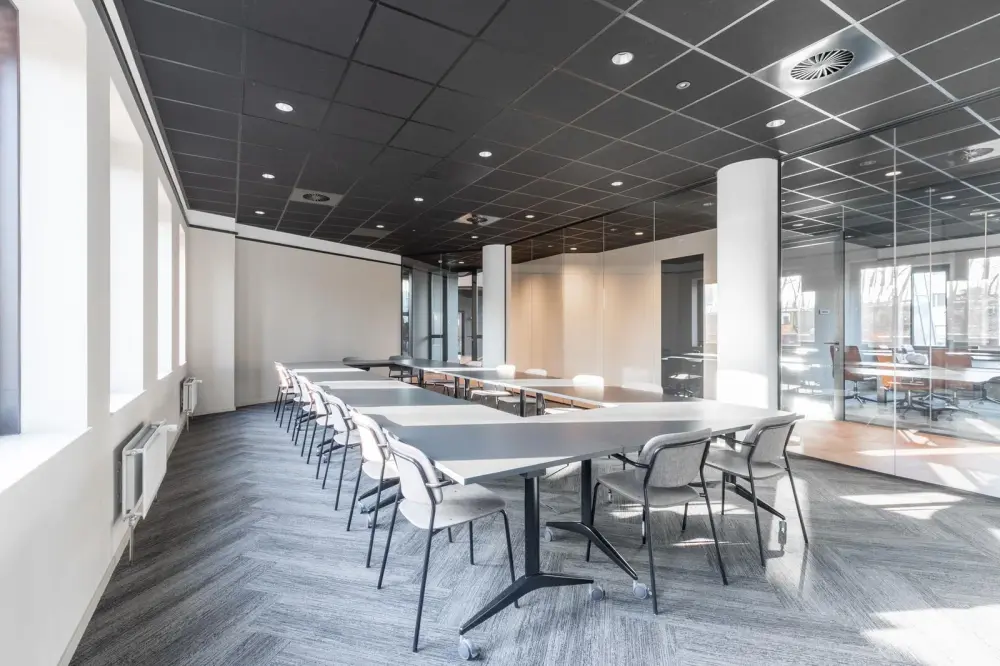
Boardroom setups dominate the local inventory with 651 rooms configured around a central conference table, making them practical for formal negotiations, legal depositions, and management reviews. For collaborative training or strategic planning, venues also supply alternative layouts, including 95 U-shape rooms, 56 workshop spaces, and 43 theatre rooms. The entry-level day rate starts at 50 EUR excl. tax for CABINE TELEPHONIQUE LENNON at Be Coworking La Jonquière, serving compact solo calls or two-person interviews.
Capacity changes the pricing scale noticeably across central arrondissements:
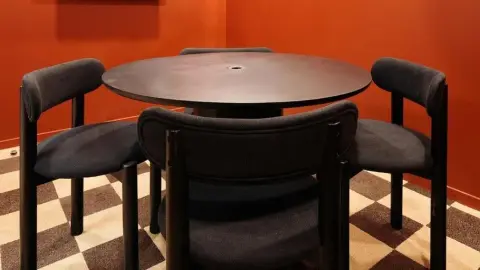
Selecting a venue near major transport nodes prevents transit delays for visiting colleagues. In Paris, 91 venues sit within 600 m of a train or metro station. The business corridor around Saint-Lazare concentrates significant supply with 17 venues, supported by 15 venues directly by Gare Saint-Lazare and 15 venues adjacent to Auber station. This density allows regional commuters and cross-town attendees to step straight from the platform into serviced workspaces.
Corporate workspace groups provide standardized setups across multiple neighborhoods. The Office Operators manages 128 offers across 7 venues, while Regus provides 65 offers across 14 venues. Spaces delivers 26 offers across 7 venues, and Signature features 29 offers across 4 venues. If you prefer distinctive independent locations, sites like Morning Laffitte, Morning Trévise, and Espace GERESO offer curated interior designs alongside comprehensive technical services.
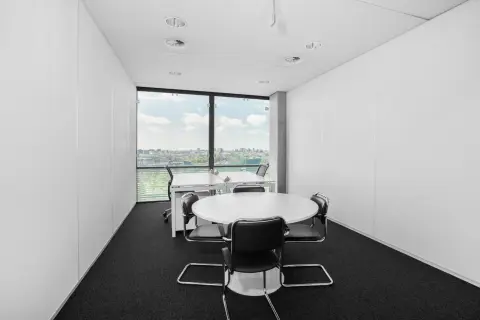
Hourly rentals suit brief client presentations, with 602 offers sold by the hour starting from 10 EUR excl. tax and a median rate of 65 EUR excl. tax. Standard policies at IWG centres such as Regus and Spaces set a minimum booking length of 1 hour. However, for sessions spanning more than four hours, reserving the entire day proves substantially more economical than stacking individual hourly slots. On rooms publishing both hourly and daily rates, booking the full day costs a median 30% less than paying for eight separate hours.
On-site equipment ensures sessions run smoothly without hauling external hardware across town. Out of 117 venues publishing their equipment lists, 117 include wifi, 112 benefit from natural light, 110 supply air conditioning, and 73 feature presentation screens. To organize your booking efficiently:
Payment occurs online at booking, cancellation terms remain clearly visible before you pay, and your official invoice is issued immediately upon confirmation.
Hunting for an inspiring meeting room rental in Paris to seat two or fifty ambitious minds? The capital of France offers no shortage of options, but finding that perfect spot—right in the heart of iconic neighborhoods and equipped with everything modern teams require—sometimes feels as challenging as reaching consensus at a committee dinner. This guide will help professionals navigate the world of Meeting rooms in Paris, book effortlessly, and sidestep wandering from Le Marais to La Défense clutching laptops and espresso cups.
The City of Light dazzles far beyond its tourist appeal—it is a powerhouse for businesses seeking energy, accessibility, and a dash of inspiration. Opting for a meeting room rental in Paris leverages the city’s rich cultural fabric and strategic role within Europe and France. It is not just about the Eiffel Tower; it is about seizing opportunities where deals are made and innovation thrives.
Companies are spoiled with choices nestled in emblematic districts—from the chic avenues of Saint-Germain-des-Prés and the historic charm of Le Marais, to the bustling streets of Opéra and the creative buzz of Bercy. Hosting professional events here turns routine seminars and conferences into memorable experiences. The unique mix of tradition and innovation fuels creativity—and, occasionally, heated debates over which bakery reigns supreme.
The success of any gathering often hinges on choosing the right environment. Each Paris district has its own flavor, atmosphere, and convenient metro links—even for those whose navigational skills are only marginally better than their karaoke performances after a Wednesday lunch.
This Left Bank gem exudes sophistication, with grand cafés, fashionable boutiques, and leafy squares tucked around every corner. A fully equipped room here is ideal for high-level board meetings or confidential interviews—moments when privacy and style matter most. Many venues cater perfectly to smaller groups, offering serenity for 2 to 12 participants. Once business concludes, debate can continue along Boulevard Saint-Germain over coffee or existential musings.
Organizing executive retreats becomes effortless thanks to refined event spaces and nearby boutique hotels. With hourly or daily booking available, planning meetings is less stressful than deciphering French road signs during rush hour.
If time means money and glass towers inspire more than gothic vaults, La Défense delivers. Modern coworking spaces and imposing business centers serve everyone from start-ups to international giants. Securing a meeting room rental here guarantees panoramic views and easy post-meeting access to brasseries. These venues accommodate anything from intimate workshops to large seminars and conferences for up to 50 participants.
An online reservation system ensures that fully equipped rooms with Wi-Fi, projectors, and all-important coffee machines are secured in moments. If only there were a tool for ensuring meetings run as smoothly as the espresso flows.
No need to wedge brainstorming sessions into cramped copy rooms. Meeting room rental services across Paris adapt to various needs, helping companies find the perfect backdrop—no baguette required, though one may appear anyway.
Paris excels at flexibility, hosting gatherings from two-person powwows to dynamic fifty-person brainstorms without breaking stride.
With configurations ranging from classroom to U-shape or theater seating, every professional event looks organized—even if the agenda says otherwise.
Booking a fully equipped room is about much more than four walls and a sad pot of instant coffee. Today’s professional events demand venues that impress, connect, and cater to every whim. Here is what separates top-tier rooms from the rest:
| Facility | Description |
|---|---|
| High-speed Wi-Fi | Stable connections for hybrid meetings and crucial email chains. |
| Audio-visual equipment | Projectors, screens, sound systems, and video conferencing tools ready to go. |
| Modular furniture | Tables and chairs easily adapted for roundtables, breakout groups, or intense minimalist debates. |
| On-site support | A dedicated contact to tame technical gremlins before they strike. |
| Catering and coffee stations | Pastries, drinks, and light meals fuel both creativity and patience. |
| Natural daylight or smart lighting | Keeping energy—and eyelids—lifted through even the longest agenda. |
These amenities let companies focus on objectives rather than last-minute printer tantrums. Central paris locations add convenience, especially for visitors eager to avoid metro marathons from Gare du Nord to Montparnasse.
Booking a meeting space in Paris should be simpler than aligning IT and sales. Thankfully, today’s options range from old-school phone calls to lightning-fast digital platforms. Comparing them reveals why dynamic organizations (and chronic overthinkers) prefer certain methods.
Gone are the days of endless emails to check Thursday morning availabilities anywhere between Bastille and Montmartre.
Whether the aim is an annual board retreat or a spontaneous team building, modern solutions offer agility and clarity for all professional needs.
The digital revolution did wonders for productivity (and stress levels). Companies no longer need to channel their inner detective hunting down venues. Platforms like workin.space allow businesses to filter hundreds of coworking spaces and event spaces throughout Paris. Selection criteria fit even the pickiest operations manager—capacity, amenities, price, and availability all in one place.
Best of all, a few clicks suffice to reserve a fully equipped room, select breakfast baskets or flipcharts, and receive instant confirmation. Secure payment happens online—making expense reports nearly pleasant. Workin.space makes online reservation and payment so simple that even the least tech-savvy manager can handle logistics in mere minutes.
For growing companies juggling priorities, every saved minute matters. Online reservation eliminates endless phone calls, paper trails, and cryptic invoices. Whether adjusting seat counts or noting dietary quirks, all details fit neatly onto a digital dashboard awaiting approval—or last-second pivots inspired by new corporate visions.
This streamlining reduces headaches and minimizes risks of double bookings or misunderstandings, turning would-be corridor wanderings into productive meeting time.
Transparency and selection are truly transformative. Teams compare dozens of central paris locations, consult real reviews, and match requirements to tailored event spaces. Forget guessing games about proximity to Châtelet or parking near Opéra—every detail is clear upfront.
By centralizing options under one metaphorical digital roof, companies regain control over planning, costs, and results. Even pessimists find themselves short on complaints—apart from debating croissants versus pains au chocolat for breakfast.
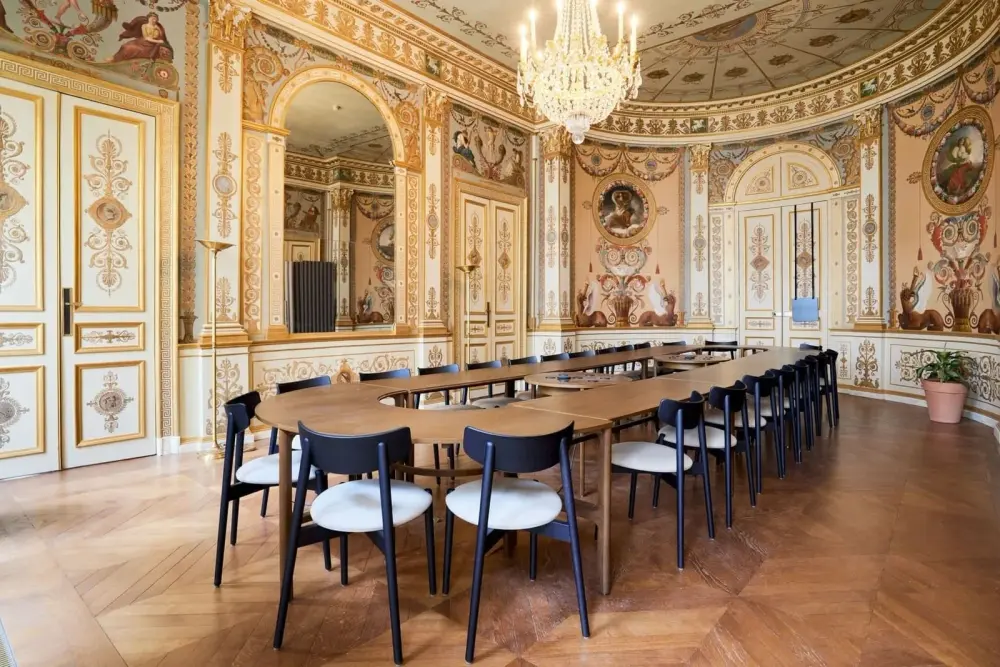
Paris has always attracted big ideas and bold discussions. Now, its array of sophisticated coworking spaces and specialized venues meets every contemporary need, supporting everything from discrete interviews to lively team building extravaganzas. Flexible room sizes and advanced setups encourage creativity, strategy, and spirited debate—all under chandeliers or sleek LED panels, depending on preference.
Combining Parisian charm with intuitive digital booking tools means professionals enjoy easy payment and rapid reservations, freeing time and energy for bigger challenges—like finishing on time or convincing colleagues that Board Game Night actually qualifies as team building. In short, Paris transforms any professional challenge into an opportunity for excellence—with better scenery and, almost always, better pastries.
Within 20 km of Paris.
701 meeting rooms are bookable in Paris: from €50 to €2,540 per day excl. tax, €419 for the median room.
By the hour, from €10. For a half-day, from €30.
Prices follow real-estate logic: central districts cost more than the outskirts, and the gap varies from one venue to the next.
679 meeting rooms for 4 people are listed in Paris.
The cheapest is CABINE TELEPHONIQUE LENNON at Be Coworking La Jonquière: €50 per day excl. tax.
By the hour it starts at €10.
407 meeting rooms for 8 people are listed in Paris.
The cheapest is Meeting room Boheme at Regus PARIS, Opéra: €65 per day excl. tax.
By the hour it starts at €12.
212 meeting rooms for 12 people are listed in Paris.
The cheapest is Meeting room Boheme at Regus PARIS, Opéra: €65 per day excl. tax.
By the hour it starts at €12.
80 meeting rooms for 20 people are listed in Paris.
The cheapest is Meeting room Boheme at Regus PARIS, Opéra: €65 per day excl. tax.
By the hour it starts at €12.
The full day is the best deal in Paris: on the rooms that publish both rates, a day costs a median 30% less than eight separate hours.
Half-days cover a morning or an afternoon; one hour is the minimum slot at IWG centres.
The lowest day rate in Paris is CABINE TELEPHONIQUE LENNON at Be Coworking La Jonquière, €50 excl. tax.
Below €419 per day, expect a small space: size, not location, drives the lowest prices.
All prices on this page are excl. tax. The invoice adds the country's standard VAT of 20%, itemised for your expense report.
Payment is taken in full at booking, instantly: card, PayPal, Apple Pay, Google Pay or Klarna depending on the country. There is no deposit and nothing to pay on site.
Bank transfer is available from €50 per booking, when the booking is made at least 6 days in advance.
We list 701 spaces in 115 venues in Paris.
Main operators: The Office Operators, Regus, Signature and Spaces.
This inventory is read live from the operators' listings: spaces appear as they are published and disappear as they are withdrawn.
Meeting room Désirade & Avès at Signature Paris, Signature, 72 Faubourg St Honoré seats up to 100 people, the largest capacity we list in Paris.
80 rooms seat 20 people or more. Beyond that, seminar rooms and event spaces are quoted on request.
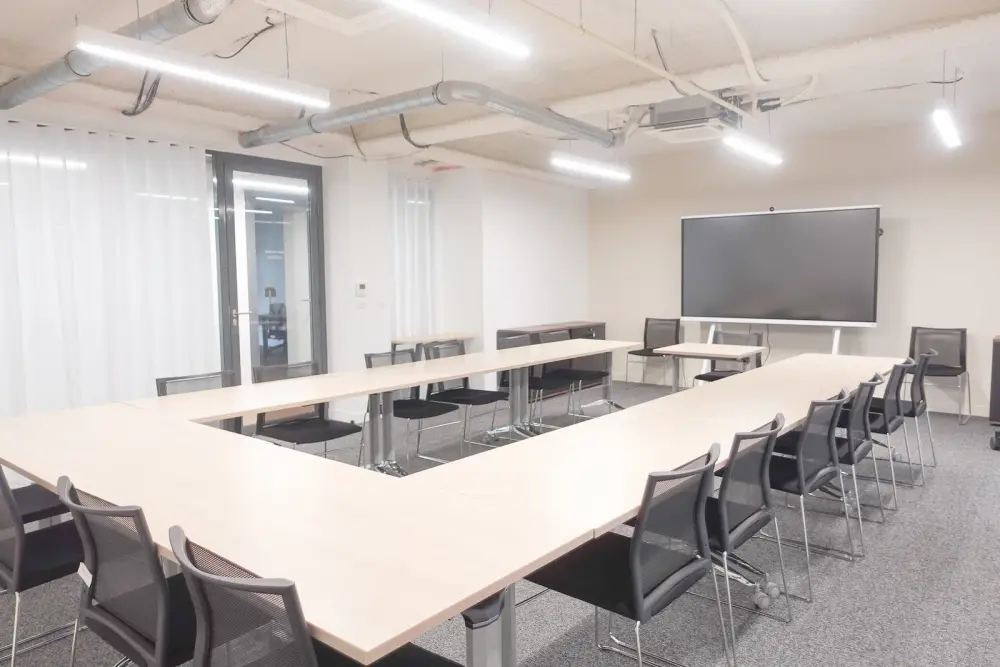
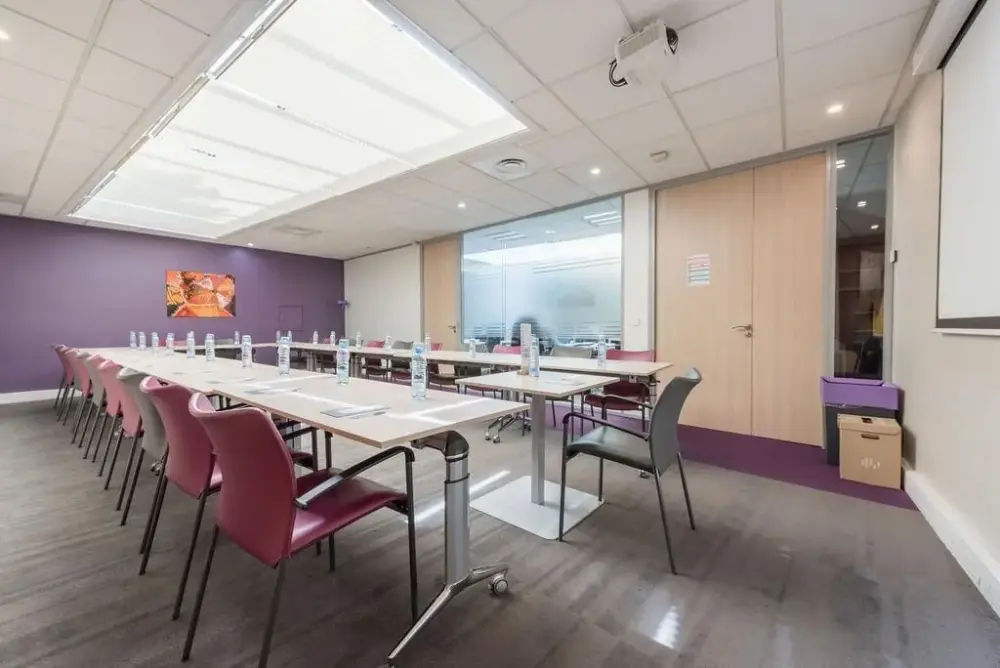
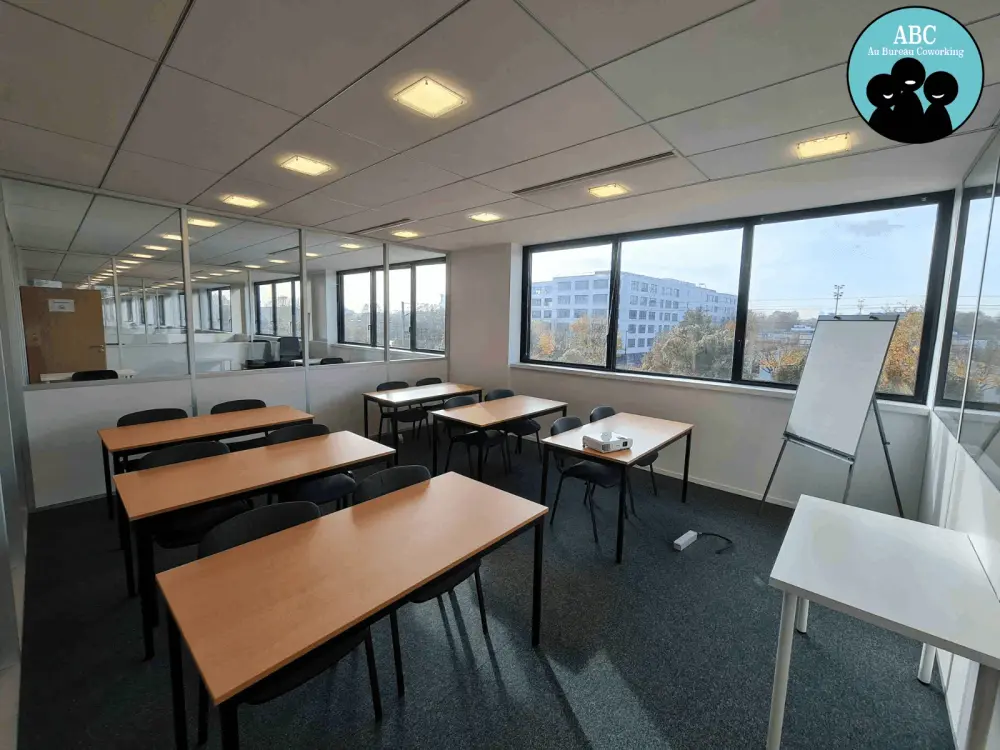
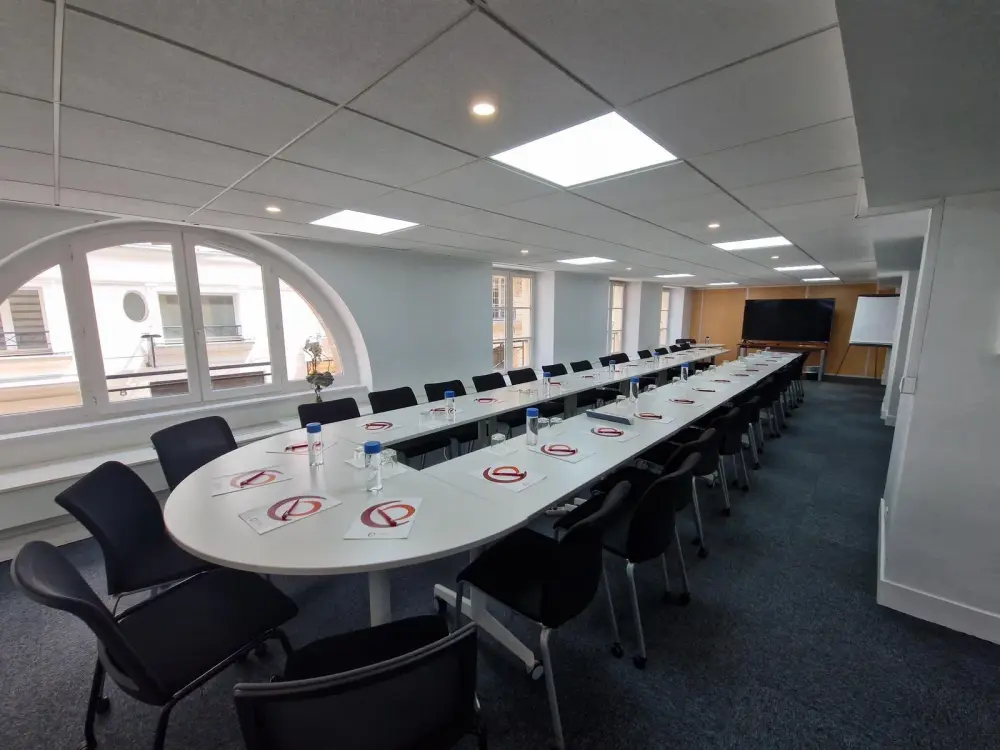
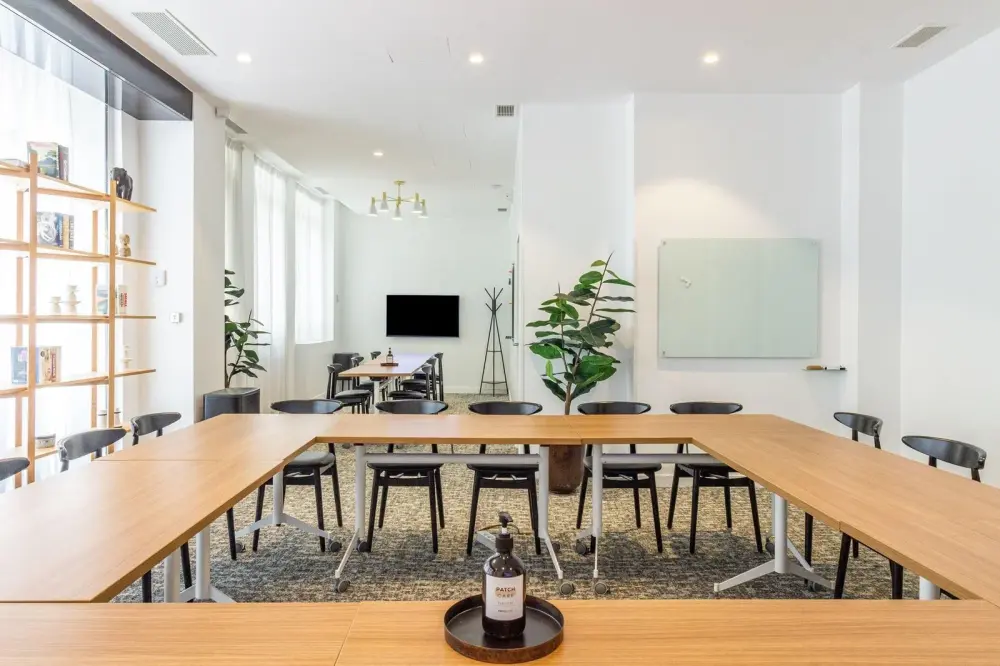
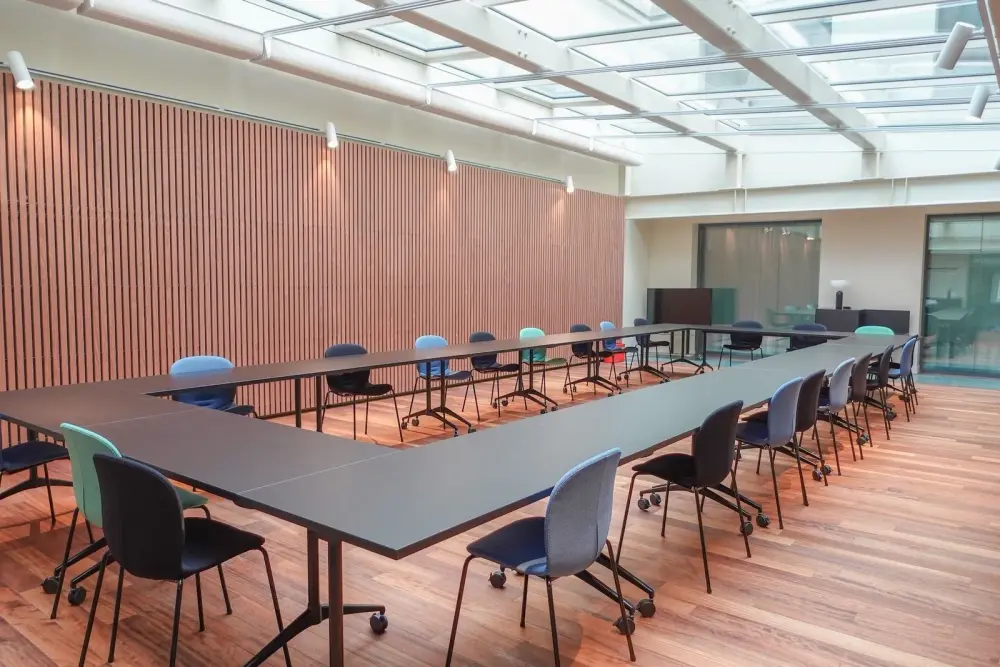
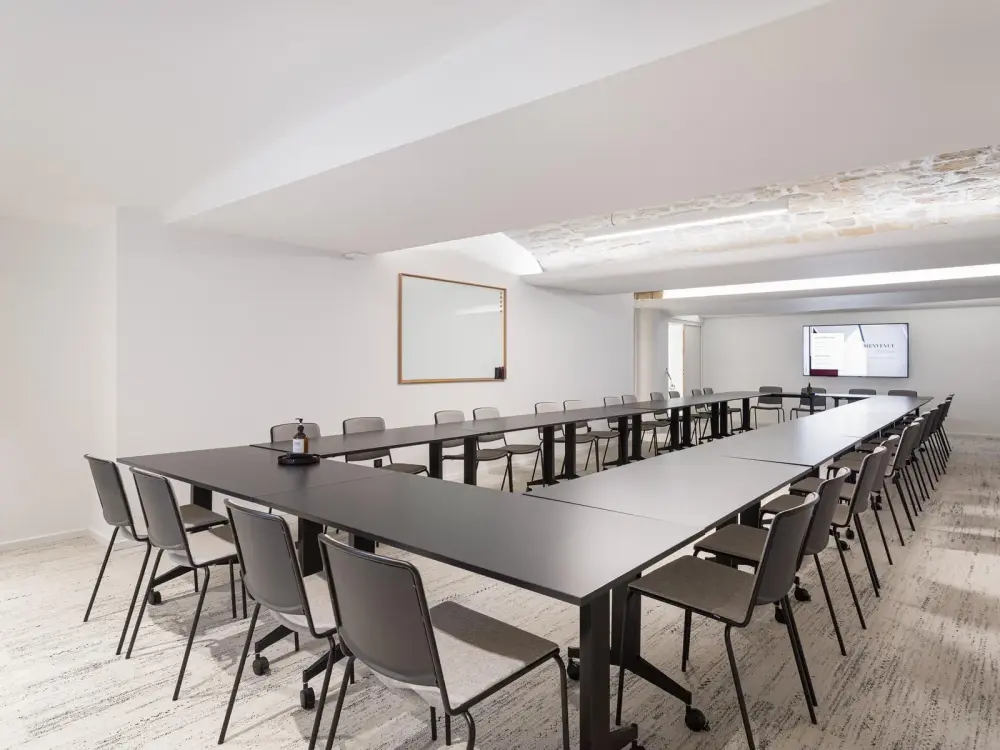
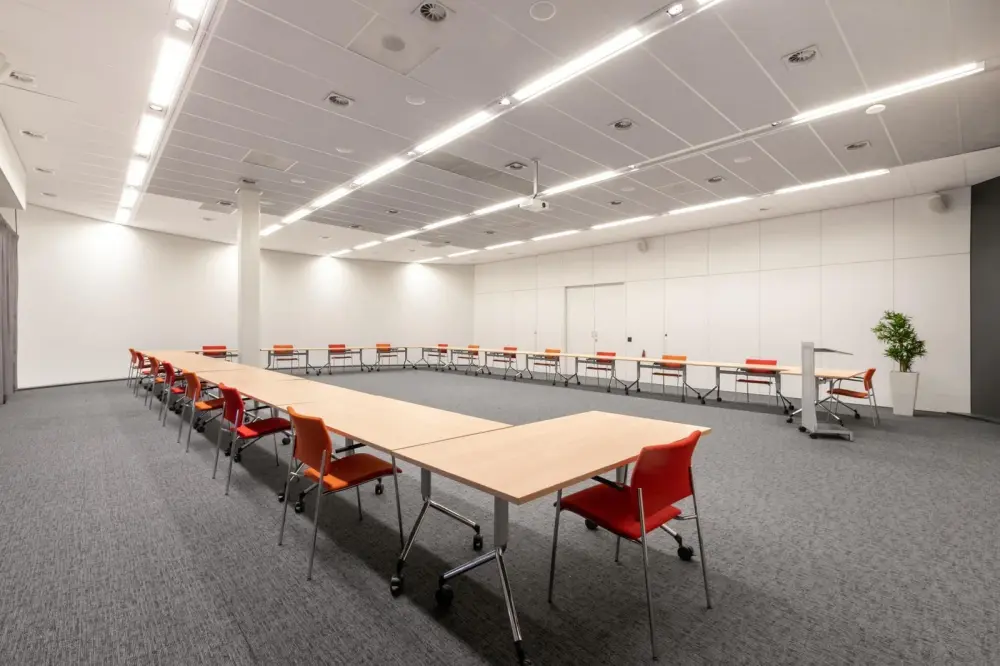
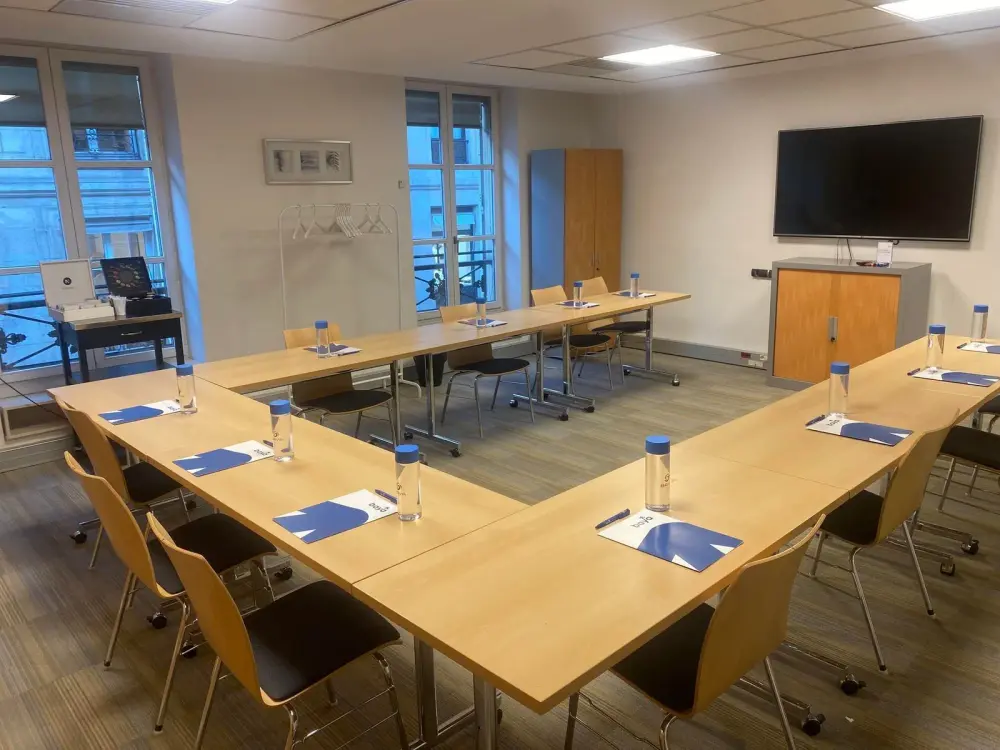
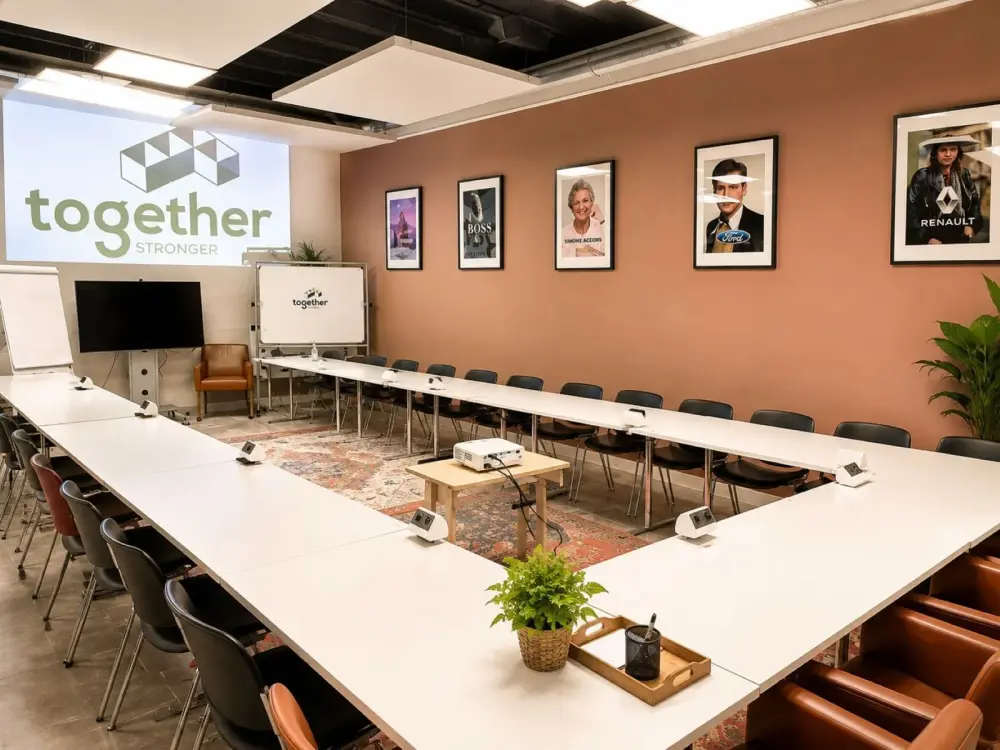
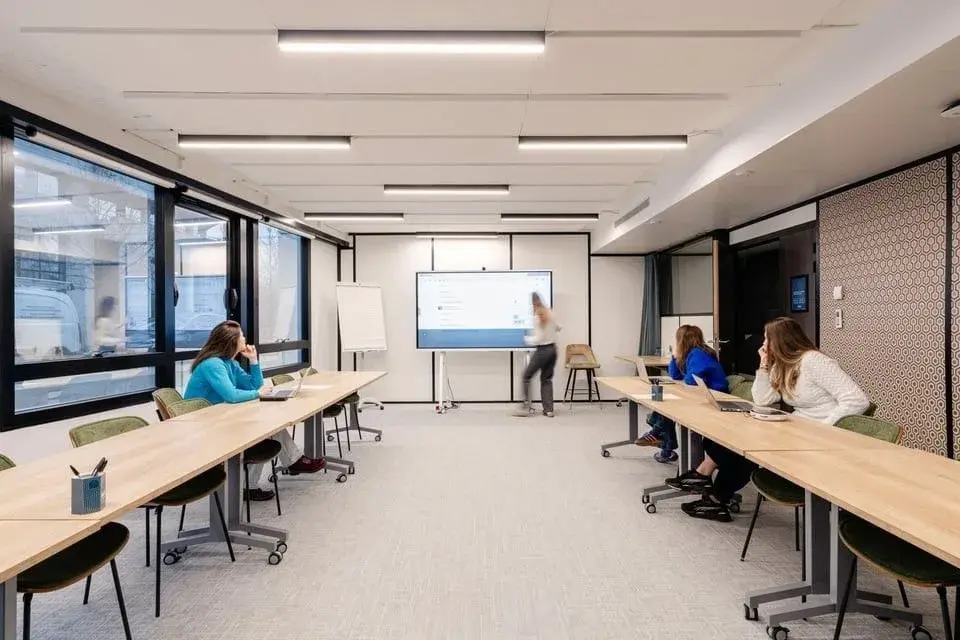
Layouts listed in Paris: Boardroom (635 rooms), U-shape (95 rooms), Workshop (55 rooms), Theatre (43 rooms), Classroom (39 rooms) and Cocktail (18 rooms).
Boardroom for decisions and interviews, U-shape for training with a facilitator, classroom for workshops on laptops, theatre to seat the most people for a talk, cabaret for group work.
Wi-Fi, a screen or TV, a flipchart and still water come with every room, along with access to the common areas and coffee machines.
In Paris, the venues that publish their equipment list video conferencing (40 venues), a video projector (59 venues), a whiteboard or flipchart (64 venues), HDMI or wireless screen sharing (33 venues), sound equipment (14 venues) and air conditioning (108 venues).
Paid extras vary by operator and are listed on each booking screen.
40 venues list video-conferencing equipment in Paris. The others provide Wi-Fi and a screen, enough for a call from your laptop.
Check the equipment line of the room you book: a room with a screen is not always a room with a camera.
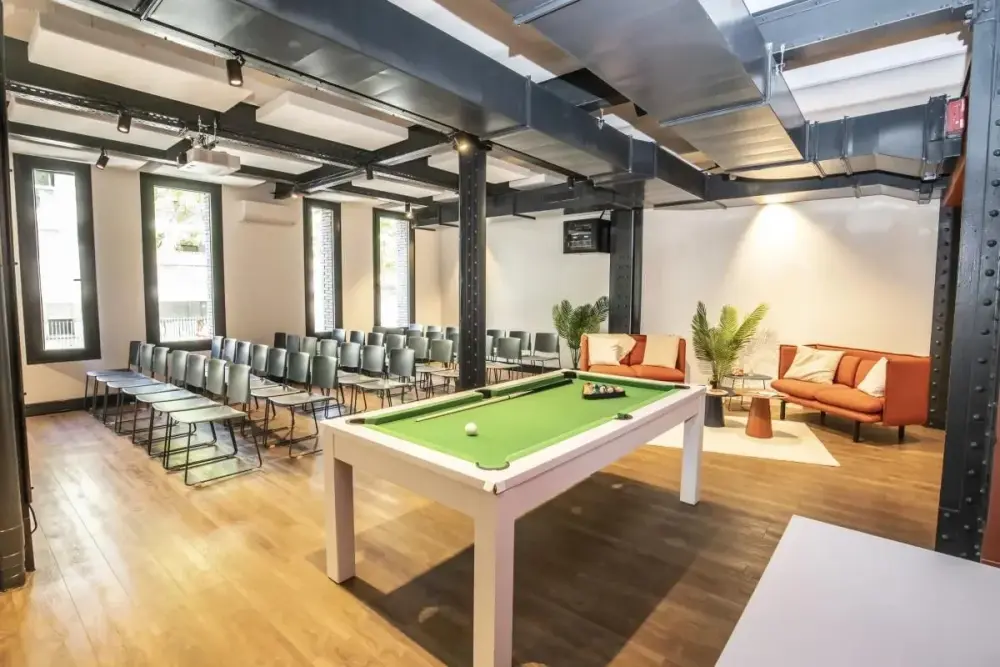
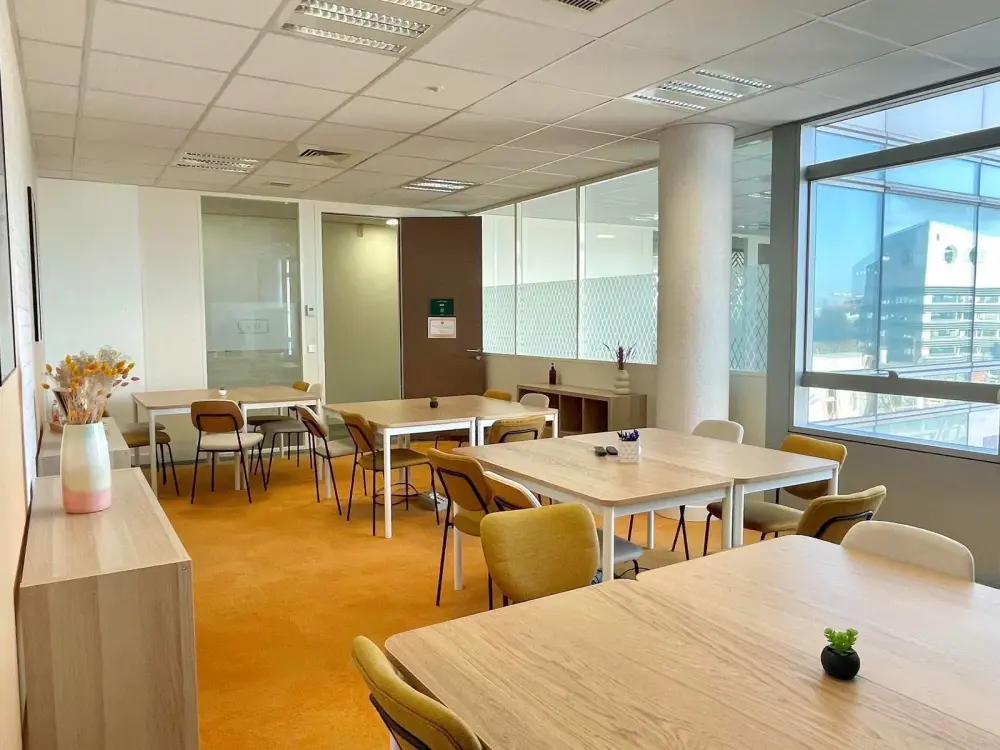
110 venues declare natural light in Paris. The photos of each space show the window side.
82 venues declare step-free access in Paris.
If access matters, message the venue before booking: the declaration covers the building, not necessarily every room.
MyCowork Montorgueil holds the highest rating from clients who booked through workin.space: 9.3/10 over 3 reviews.
Ratings only count reviews left after a completed booking.
The Office Operators (128 spaces), Regus (65 spaces), Signature (29 spaces) and Spaces (26 spaces) run part of the spaces we list in Paris, alongside independent venues such as Morning Laffitte, Morning Trévise and Espace GERESO.
Pick the space, the date and the time slot, pay online, and the confirmation arrives by email immediately. Spaces that are not confirmed instantly are validated by the operator, usually within the day.
263 spaces in Paris confirm instantly at booking.
Yes, whenever the slot still shows in the search results: there is no fixed cut-off hour. Same-day availability depends on each venue.
Book at least an hour ahead to give the reception time to prepare the space.
One hour at IWG centres (Regus, Spaces, HQ). Other operators set their own minimum, shown before payment; most sell the half-day and the day.
Standard hours are 9:00 to 17:00. Some venues open until 22:00; the calendar only offers the slots each venue actually sells.
97 venues in Paris give 24/7 access to its members, on a separate contract from the day booking.
You must arrive before the official closing time; late access is never guaranteed.
Yes, from your account, without calling anyone. Cancellation terms depend on the country and are shown before payment; when a cancellation is eligible, the refund and the credit note are issued automatically.
The invoice is issued as soon as the booking is confirmed, with VAT itemised, and stays available in your account. Payment is made online at booking.
Bank transfer is available from €50 per booking, when the booking is made at least 6 days in advance.
An account is created with your first booking and works in every city. You can book for a colleague: enter their name as the attendee, the invoice stays in your name.
Give your name at reception: the space is ready and the Wi-Fi code handed over. About 80% of venues have a staffed reception; the others send access instructions with the confirmation.
In Paris, 54 venues list a weekday reception.
Yes: breakfast, lunch, sweet breaks and coffee or tea service can be added to the booking. Order at least 48 hours ahead; the venue fulfils it, and you are refunded automatically if it cannot.
In Paris, 114 venues list an on-site cafeteria or kitchen.
Book the setup time: the space is yours only for the slot you paid for, and the next booking may follow. Running over is at the venue's discretion and charged at the hourly rate when possible.
90 venues are less than 600 m from a station in Paris, notably near Saint-Lazare, Gare Saint-Lazare and Auber.
36 venues list car parking, usually a paid extra to add at booking.
25 venues list bicycle parking.
A flipchart comes with every meeting room.
In Paris, the venues that publish their equipment list a printer (112 venues), a video projector (59 venues) and a whiteboard or flipchart (64 venues).
Printing is charged per copy at the reception.
Interview or one-to-one: a room for 2 to 4 people. Training or workshop: 8 to 12 seats in classroom or U-shape. Board meeting: a boardroom for 10 to 14. Seminar: 20 seats or more, or an event space on request.
In Paris: 679 rooms for 4 people, 407 for 8, 212 for 12, 80 for 20 or more.
Yes: 585 rooms publish an hourly rate in Paris, from €10 excl. tax. One hour is the minimum at IWG centres.
For a confidential call or solo work, a day office costs less and closes the door. For a laptop and a coffee, a coworking day pass is the cheapest option. A meeting room is the right choice from three people, or whenever you need a screen and a whiteboard.
Starting prices excl. VAT, per slot. Final rates are calculated in real time during your search.
| Space | Capacity | Half day | Day |
|---|---|---|---|
| Salle Pinglet — Morning Feydeau | 4 people | €80 | €160 |
| Salle Vivienne — Morning Vivienne | 4 people | €104 | €177 |
| Room MR-201 — Spaces PARIS, Spaces Réaumur | 4 people | from €124 | from €218 |
| Salle Camille — Morning Feydeau | 5 people | €140 | €280 |
| Salle Ponceau — Morning Vivienne | 10 people | €258 | €442 |
| Salle Cité-Jardin — Morning Laffitte | 6 people | €300 | €600 |
| Salle Chandebise — Morning Feydeau | 11 people | €240 | €480 |
| Salle Phalanstère — Morning Laffitte | 12 people | €580 | €1,160 |
| Room Grand Rex — Spaces PARIS, Spaces Bonne Nouvelle | 19 people | from €462 | from €810 |
| Salle 16/55pax — Baya Paris - Petits Champs | 55 people | €1,063 | €1,875 |
| Salle TA002 Experience Room — Patchwork Taitbout | 30 people | €1,200 | €1,950 |
| Salle de Réunion Coco Chanel — Mitwit Paris 09 Victoire | 30 people | €765 | €1,176 |
Starting prices excl. VAT. Exact rates are shown in real time during your search based on date and slot.